

Modern B2B lead generation works best when you remove the "mystery" from your sales process. Instead of waiting for a discovery call to reveal details, you share your pricing, your ideal client profile, and your onboarding steps directly on your website. This transparency acts as a natural filter to attract serious, high-intent buyers while discouraging those who aren't a fit. The result is a faster sales cycle and a calendar filled with people who already understand and value how you work.
The Problem: The "Mystery" Costs You Money
In the traditional B2B world, there is a long-standing rule: Never put your prices or process on your website. The theory was that you needed to "build value" on a call before revealing the cost.
In 2026, this strategy is backfiring. Busy decision-makers are exhausted by "mystery" marketing. When you hide the basic answers, you don't build mystery, you build frustration. This leads to an inbox full of "tire-kickers" who spend forty minutes of your time only to realize they can’t afford you. Industry research consistently shows that the majority of the B2B buying journey is now completed in secret before a prospect ever reaches out to a vendor. If you aren't giving them the answers during their research phase, they will move on to a competitor who is more open.
Key Takeaway: Vague marketing attracts low-quality leads; transparency attracts high-intent partners.
The 3 "Hidden Answers" You Must Give Away
To stop wasting time on discovery calls that go nowhere, you must publish the three things most service providers are afraid to show.
- The Pricing Reality: If you have a standardized package, show the exact price. This removes all "price anxiety" immediately. If your work is too custom for a single number, show a typical project range. By being the first to mention a number, you anchor the value of your work and stop "budget-mismatch" conversations before they start.
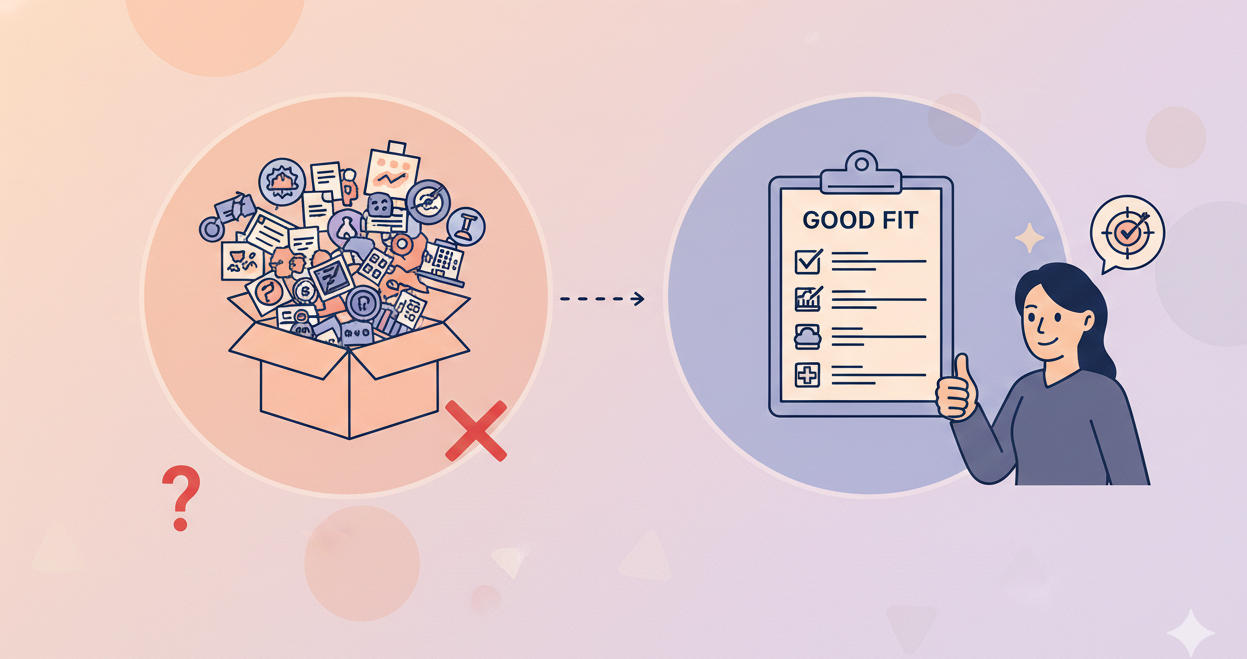
- The "Good Fit" List: Being honest about who you help is the fastest way to prove you can help your target niche. List the industries or project types that mesh with your workflow and stick with them.
- The "What Happens Next" Map: Instead of a vague "we’ll get started," show the exact steps of your onboarding. For example, tell them that within 10 minutes of booking, they will receive an Intake Form. When a client knows exactly what to expect after booking, they feel in control and ready to buy.
Key Takeaway: Publishing your exact prices, ideal client profiles, and onboarding steps replace the "fear of the unknown" with professional certainty. By giving away these "hidden answers" upfront, you don't just find more leads; you filter for high-intent clients who are ready to respect your process and pay your worth.
Why "Honesty" is Your Best Search Strategy
Search engines have evolved. Google and Bing are no longer just looking for keywords; they are looking for "Entities" that provide the most direct utility.
When you provide clear, factual data like exact service timelines and honest pricing structures, AI crawlers see your content as a "Source of Truth." This makes you more likely to be featured in AI-generated summaries. Furthermore, experts agree that as AI makes basic content creation easy, human trust becomes the primary differentiator for service firms. By showing your "secret sauce" (your process) and your "scary numbers" (your price), you demonstrate a level of confidence that automated competitors cannot fake.
Key Takeaway: Honesty makes your content more "scrappable" for AI and more "believable" for humans.
Our Take: The "Secret" to Selling Faster
Our perspective is simple: Honesty is a luxury. Only a service provider who is truly excellent at what they do can afford to tell a prospect "No."
When you give away the hidden answers, the power dynamic of the discovery call changes completely. It is no longer a high-pressure sales pitch where you are trying to "convince" someone to buy. Instead, it becomes a high-level strategy session between two experts. You aren't defending your price because they already knew the price before they booked the call. You are simply deciding if you want to work together.
Key Takeaway: Radical transparency doesn't just find you more leads; it finds you more respect.
Conclusion: Honesty is Your Competitive Advantage
Choosing to be transparent isn't just a marketing tactic; it is a business decision that protects your most valuable asset: your time. In an era where AI can generate endless generic content, the "Honest Sales Process" sets you apart by proving you have nothing to hide. By giving away the "hidden answers", you shift the power dynamic from a vendor hoping for a sale to an expert selecting a partner.
Remember, you aren't "losing" prospects by being open; you are simply filtering for the ones who respect your expertise and are ready to get to work.
Frequently Asked Questions
What is a B2B lead generation?
In simple terms, B2B (Business-to-Business) lead generation is the process of finding and attracting other companies who need your professional services. Instead of just looking for "anyone," it is about starting a conversation with the right decision-maker at the right business. In the "Honest Sales" model, lead generation isn't about chasing people; it’s about putting enough clear information out there so that the right businesses raise their hands and say, "You’re exactly what we’re looking for."
What are the 4 C's of B2B marketing?
While traditional marketing uses the "4 P's," B2B service providers find more success with the 4 C’s, which focus on the client’s experience:
- Customer Solution: You aren't just selling a "service"; you are solving a specific problem they are facing right now.
- Cost: This isn't just your price tag. It’s the "cost" to the client—including their time and the risk of the problem not being solved.
- Convenience: How easy is it for them to find your prices, understand your process, and book a call? (This is where "Radical Transparency" wins).
- Communication: This is the "Human Touch." It’s moving away from one-way "promotion" and toward a two-way relationship built on honesty.
What does B2B mean?
B2B stands for Business-to-Business. It describes a transaction or relationship where one business provides services or products to another business, rather than to individual consumers (B2C). For example, a lawyer who helps a tech startup with their contracts is doing B2B work. Because B2B deals often involve higher prices and longer relationships, trust and clarity are the most important parts of the sale.